Fight Analysis
Anthony Hernandez vs Gregory Rodrigues: Pressure, Entries, and Cage Control to Watch
Preview Hernandez vs Rodrigues through observable pressure, entry and cage-control questions without pretending to predict the August 22 result.
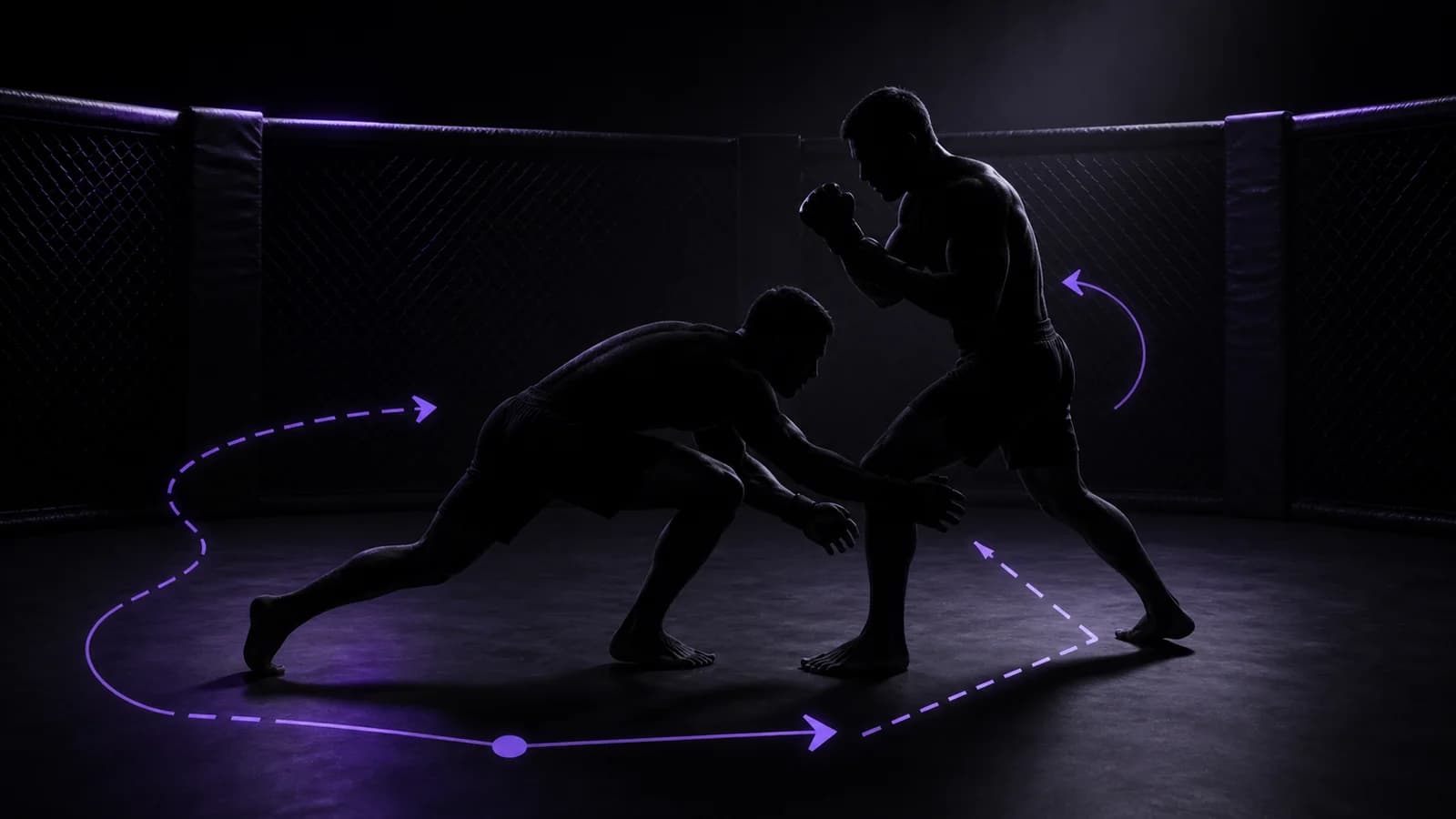
Anthony Hernandez and Gregory Rodrigues are scheduled to meet in the middleweight main event at UFC Fight Night in Sacramento on August 22, 2026. The useful preview question is not who “must” win. Watch how each fighter manages the first layer of pressure: the open-space entry, the response at the fence, and the work needed to restart after a break.
The official UFC event page lists Hernandez versus Rodrigues at Golden 1 Center. Cards can change, so verify the event page before relying on the matchup or start time.
Watch where the first exchange begins
Mark the center, the warning track near the fence and the fence itself. Pressure has different meaning in each zone. Forward steps in open space can take away an exit. A rush that reaches the fence without a stable stance can give the opponent an angle out.
For the first minute, ask:
- Who places the lead foot closer to the center after each reset?
- Does the pressured fighter exit laterally or retreat on a straight line?
- Which feint produces a real defensive reaction?
- Does the attacker enter behind strikes, a level change or a naked reach?
Describe what happens before you explain why.
Separate pressure from output
One fighter may advance while the other lands the cleaner strike. Another may throw less but use the fence to create clinch or takedown work. Do not reduce the phase to “aggressive” and “defensive.”
Track three events:
- Entry: the action that crosses striking distance.
- Connection: a landed strike, body lock, underhook, head position or completed takedown attempt.
- Exit or continuation: the angle out, break, mat return or restart.
This sequence shows whether pressure produces control or merely movement.
Read the level change
A level change can threaten a shot, draw the hands down or set up an overhand. Watch the posture before it: are the feet close enough to drive, and does the head move to a protected position? Then watch the defender's first answer: hips back, frame, underhook, lateral step or counterstrike.
The first defense does not end the exchange. The important information often arrives in the second effort, when both fighters adjust their grips and foot position near the fence.
Study cage control without awarding it yourself
The Unified Rules and judges determine scoring; a viewer should avoid inventing a score from camera position alone. Use cage control as a technical observation:
- Who controls head position in the clinch?
- Who wins inside hand position?
- Does the attacker keep the opponent's shoulders near the fence?
- Can the defender turn, pummel or separate?
- What happens immediately after the break?
Fence time without effective offense does not tell the whole round. Combine position with visible damage, effective grappling and the actual scoring criteria.
Watch fatigue as an observation, not a diagnosis
Note changes you can see: stance width, hand return, entry speed, time spent stationary and the number of steps needed to leave the fence. Do not claim a fighter is “gassed” from one breath or facial expression. Pacing, damage and tactical choice can look similar on broadcast footage.
Build a review in MMA AI: Cage Coach
After the event, use legally obtained footage you have permission to analyze. In your own training, recreate only the position at technical speed with a coach and cooperative partner.
Open MMA AI: Cage Coach with your own training clip and compare one sequence: open-space entry, fence connection and exit. Coach Rico's video feedback can help you keep the observation beside your training log. It cannot reproduce a live corner, confirm a fighter's intention or turn broadcast angles into complete evidence.
A neutral viewing card
First reliable entry:
Defender's first response:
Position at the fence:
Second effort:
Exit or restart:
What changed in the next exchange:
Use the card for both fighters. The matchup becomes more interesting when you follow the same question across several exchanges instead of treating one highlight as the whole fight.