
Training guide
Weight Cutting in MMA: What Fighters Do and What It Costs
See how much MMA fighters cut, what studies measured, how commissions changed weigh-ins and how you plan a small, safer cut for an amateur bout.
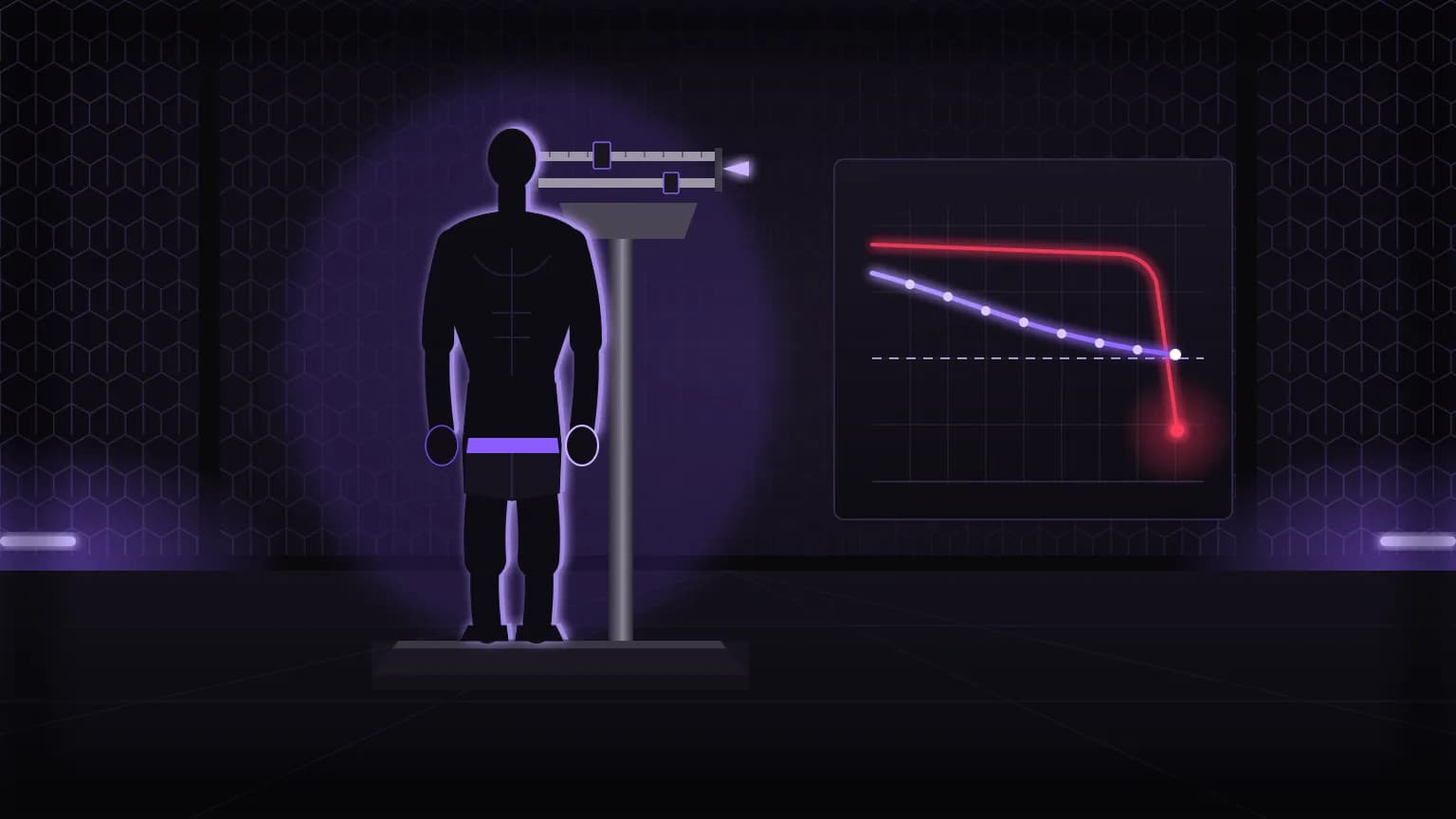
Weight cutting means you drop body mass before the weigh-in, mostly water and gut content in the last days, then regain it before the fight. MMA fighters cut more than any other combat athletes: a UK survey measured losses of 9% of body mass in the final week, and a 5% dehydration still slowed repeat efforts 24 hours later in a controlled trial.
Below, you get what the research measured, why commissions rewrote their weigh-in rules, and how to plan a small cut for an amateur or first pro bout. It gives you no dehydration protocol. Fight at a weight you can reach by eating and training well, and you skip the most dangerous part of the sport you never see on the broadcast.
Separate the diet from the cut
Sports scientists split making weight into two parts. Reale, Slater and Burke's review of acute weight loss in combat sports describes chronic strategies, the weeks of eating and training that lower your body fat, and acute strategies in the final days, usually called the cut.
- Chronic loss: you eat a little less for weeks, train hard and lose fat and some muscle glycogen. Your scale drops slowly and stays down.
- Acute loss: you restrict fluid, food and salt, then sweat in saunas, hot baths or plastic suits in the last week. The scale drops fast and climbs back once you eat and drink.
The cut exists because of timing. In most professional MMA, you weigh in the day before the fight. Crighton, Close and Morton's BJSM editorial on MMA weight cutting puts that window at 24 to 36 hours, which fighters treat as enough time to rehydrate and refuel. In a same-day weigh-in, that window shrinks to hours, and most of the incentive to dehydrate disappears.
See how much MMA fighters actually cut
Every study below measured MMA athletes directly or pooled MMA data in a systematic review. Read the numbers as body mass lost before the weigh-in unless the row says regain.
| Study | Who they measured | What they found |
|---|---|---|
| Crighton et al., 2016 | 30 UK MMA fighters, flyweight to welterweight | 9 ± 2% of body mass lost in the final week, plus a further 5 ± 2% in the last 24 hours |
| Matthews et al., 2019 | Systematic review, 16 studies, 4,432 combat athletes | The largest changes came from two MMA groups: 7.4 kg lost (about 10%) and 7.4 kg regained (11.7%) |
| Coswig et al., 2015 | 17 Brazilian MMA fighters around real bouts | The rapid-loss group reported 7.4 ± 1.1 kg lost in the week before the event, about 10% of body mass |
| Kirk et al., 2020 | 124 professional fighters at five California events | Fighters stepped into the cage at least 1 to 2 divisions above the class they weighed in for |
| Kasper et al., 2019 | Case study, one elite male MMA fighter over 8 weeks | 18.1% body mass lost (80.2 to 65.7 kg), with 9.3% from dehydration in the final 24 hours |
The methods matter as much as the totals. Barley, Chapman and Abbiss surveyed 637 combat athletes across seven sports. MMA fighters reported the highest sauna use (76%) and water loading (67%), and the second-highest use of rubber or plastic suits (63%). In Crighton's UK sample, 37% used prescription or over-the-counter diuretics, every fighter fasted or cut carbohydrate in the final 3 to 5 days, and only 20% took advice from a qualified sports dietitian or nutritionist.
Count what the cut costs you
You cut weight to fight a smaller opponent. The research asks whether you arrive as the same fighter. Three kinds of evidence answer that question, and none of them favours a large cut.
Expect slower repeat efforts
Barley and colleagues dehydrated 14 MMA athletes by about 4.8% of body mass with three hours of cycling in 40 °C heat, then let them eat and drink freely. Their repeated sled pushes ran 19% slower after 3 hours and still 14% slower after 24 hours, compared with a control session. Their body mass stayed below the control level at 24 hours. A day of free eating and drinking did not undo a 5% dehydration.
The same team's narrative review reaches a careful conclusion: studies show a negative or no effect of weight cutting on performance overall, but larger cuts of about 5% in under 24 hours do impair repeat-effort performance. MMA rounds ask for exactly that kind of effort.
The American College of Sports Medicine's position stand on fluid replacement sets the goal of preventing a water deficit above 2% of body weight during exercise to avoid compromised performance. Most MMA cuts start the fight from a deficit well past that line.
Watch the blood markers
Coswig, Fukuda and Del Vecchio took blood from 17 MMA fighters before and after real bouts. The rapid-loss group showed higher muscle damage markers (LDH and AST) than fighters who weighed in on fight day without cutting. The authors concluded that rapid weight loss hurt energy availability and raised catabolic markers.
The Kasper case study tracked one elite fighter through a full camp. After 7 weeks of eating 1,300 to 1,900 kcal a day, water loading at 8 litres a day and a final 24-hour dehydration, his resting metabolic rate fell by 331 kcal, his testosterone dropped below 3 nmol/L, his cholesterol rose above 6 mmol/L and his blood work showed acute kidney injury. He also failed to complete his performance tests. One athlete proves nothing about averages, but it shows you the full price of an 18% cut in numbers.
Stop expecting the regain to win the fight
Kirk, Langan-Evans and Morton compared 62 winners with 62 losers at five California events. Neither the fighter's mass on fight night nor the kilograms regained between the two weigh-ins predicted who won, and neither predicted how the bout ended. A smaller Brazilian study by Coswig and colleagues in 2019 followed 15 fighters and linked regain to match outcomes and time-motion patterns. Read both as small samples. Neither one shows a reliable reward for a bigger cut.
Know who died making weight
Weight cuts kill people. In November and December 1997, three US college wrestlers died within six weeks. The CDC report on those deaths describes the same routine in all three: vapor-impermeable suits under cotton sweats, hard exercise in hot rooms, and restricted food and fluid. One wrestler tried to lose 15 lb in about 12 hours. Another died with a body temperature of 108 °F (42 °C).
MMA has its own cases. Crighton's editorial records that Brazilian fighter Leandro Souza died in a sauna in September 2013 after he tried to lose about 15 kg, roughly 20% of his body mass, in 7 days. The same editorial lists the symptoms fighters report during cuts: nausea, vomiting, headaches, cramping, seizures and fainting.
Learn how commissions changed the rules
Regulators responded in different ways. Check which ones govern your event before you plan anything.
Read California's 10-point plan
The California State Athletic Commission approved a 10-point plan against severe dehydration in MMA on 16 May 2017, with a six-month review period. Its tools included licensing fighters by weight class, specific gravity strips to test hydration and additional weight classes. In the July 2018 minutes, executive officer Andy Foster stated the plan's intent: get athletes below a 10% weight cut. He added that some boxers still cut 20% of their body weight before fights.
Use the extra Unified Rules classes
The Unified Rules of MMA list 15 weight classes, including super lightweight (155 to 165 lb), super welterweight (170 to 175 lb), super middleweight (185 to 195 lb) and cruiserweight (205 to 225 lb). Smaller gaps give you a class closer to your walking weight. Promotions still choose which classes they use, so compare the full table on our MMA weight classes guide.
Pass ONE Championship's hydration test
ONE Championship tests hydration at the weigh-in. You submit a urine sample, and a specific gravity of 1.025 or lower counts as hydrated. Fail the hydration test and you may not weigh in. ONE's event results show the line in practice: 1.0250 passes and 1.0251 fails. ONE also sets higher limits: its lightweight division runs to 170 lb, where the Unified Rules cap lightweight at 155 lb.
Borrow wrestling's weekly ceiling
US high school wrestling uses a weight descent plan. The HHSAA program under NFHS rules limits planned loss to an average of 1.5% of base weight per week, requires a urine specific gravity of 1.025 or lower before body fat testing, and sets a floor of 7% body fat for boys and 12% for girls. MMA has no equivalent national rule, but the 1.5% weekly ceiling gives you a tested upper limit for your own plan.
Plan a small cut for your amateur bout
Use this plan for a first amateur or early pro bout under a coach. It keeps your diet slow and your final-week change small, and it leaves out sweat and fluid restriction completely. Bring it to your coach and, if you can, a sports dietitian.
- Weigh yourself every morning for two weeks. Step on the scale after the bathroom and before food, in the same clothes. Average the last 7 days. That number is your walking weight.
- Find your class on paper first. Convert the limit with the MMA weight class calculator. Read your event's rules: same-day or day-before weigh-in, allowance or no allowance. IMMAF's amateur weigh-in procedure allows no tolerance above the limit and one official attempt on the scale.
- Divide the gap by the weeks you have. Subtract the limit from your walking weight, then divide by the weeks until the weigh-in. Keep the result well under 1.5% of your body weight per week.
- Lose it by eating, early. Cut a modest amount of food, keep protein high and keep training. Aim to reach the limit, or within about 1 kg of it, one week out.
- Drink normally the whole week. Skip saunas, plastic suits, water loading, diuretics and laxatives. If your plan needs any of them, you picked the wrong class.
- Eat and drink as usual after the weigh-in. You lost no water on purpose, so you need no rescue plan.
- Pick the heavier class when the math fails. Fight at the weight your body sits at, and come back down after a slow diet if you still want the lower class.
Run the numbers on two fighters
Fighter A walks around at 72.0 kg and wants lightweight, 155 lb or 70.3 kg. The gap is 1.7 kg, 2.4% of body mass. Over 8 weeks, that comes to 0.21 kg a week. A small daily deficit covers it, and Fighter A reaches the limit without touching water.
Fighter B walks around at 77.0 kg and also wants lightweight. The gap is 6.7 kg, 8.7% of body mass, close to the 9% final-week cuts in Crighton's survey. Spread over 8 weeks, that asks for 0.84 kg a week, about 1.1% of body mass every week, while sparring hard. Fighter B has two honest options: fight at welterweight, 170 lb or 77.1 kg, which matches the walking weight, or start a slow diet months before the next booking. Check whether your event uses the Unified Rules super lightweight class at 165 lb (74.8 kg), which sits between the two.
| Your weekly loss needed | Read it as | What to do |
|---|---|---|
| 0, you already sit at or under the limit | Made | Keep eating to train. Weigh in as you are. |
| Under 0.75% of body weight | Small | Diet slowly and reach the limit a week out. |
| 0.75 to 1.5% of body weight | Tight | Ask your coach and a dietitian. Consider the next class up. |
| Over 1.5% of body weight | Too fast | Move up a class or move the fight date. |
Fighter A needs 0.3% a week and lands in the small row. Fighter B needs 1.1% a week and lands in the tight row, with hard sparring on top.
Fix the five classic mistakes
- You book the class first and do the math later. Run the gap before you accept the fight. Your matchmaker cannot see your scale.
- You copy a pro's cut. Pros cut with doctors, dietitians and commissions watching, and their results in the studies above still look bad. Your amateur bout gives you none of that support.
- You start the diet in fight week. A late start forces the cut into water. Move the start date back, or move the class up.
- You trust the 24-hour window to fix everything. Barley's sled data showed slower efforts a full day after a 5% dehydration. Plan as if the window fixes nothing.
- You keep quiet about symptoms. Dizziness, confusion, a racing heart, cramps, vomiting, fainting or very dark urine mean you stop, drink and get medical help. Tell your coach the same hour.
See a physician before you plan any weight loss for a fight if you are under 18, take medication, have kidney, heart or blood pressure problems, or have a history of disordered eating. Follow your commission's medical instructions over anything in this guide.
Map the rest of your preparation with the MMA fight camp plan, count down the days with the competition countdown planner, and read the MMA rules guide so you know what happens after you make weight.
Get quick answers
How much weight do MMA fighters cut?
Studies of MMA fighters measure about 10% of body mass in the final week. Crighton's UK survey found 9% in the week before competition plus a further 5% in the last 24 hours. Kirk's California data showed fighters competing 1 to 2 divisions above their weigh-in class.
How do MMA fighters cut weight?
Surveys report saunas, water loading, plastic suits, fasting, low-carbohydrate diets and, in some cases, diuretics. Barley's survey found sauna use in 76% of MMA fighters and water loading in 67%. This guide describes those methods so you recognise them. Do not copy them.
Is weight cutting safe?
A large cut carries real risk. Controlled studies show slower repeat efforts after a 5% dehydration, a case study documented acute kidney injury, and dehydration-driven cuts have killed wrestlers and at least one MMA fighter. A slow diet with normal drinking carries far less risk.
How long before a fight should you start losing weight?
Start as soon as you know the date, and give yourself enough weeks to stay well under 1.5% of body weight a week. High school wrestling caps planned loss at an average of 1.5% a week. Plan to sit near the limit a week before the weigh-in.
Does rehydrating after weigh-ins help you win?
The evidence says no reliable advantage. Kirk and colleagues found that neither fight-night mass nor the kilograms regained predicted winning or losing in 124 professional fighters.
What does a hydration test measure?
It measures urine specific gravity, how concentrated your urine is. ONE Championship counts 1.025 or lower as hydrated, and US high school wrestling uses the same 1.025 line.
Check the sources
- Crighton, Close and Morton, BJSM 2016
- Matthews et al., IJSNEM 2019
- Barley, Chapman and Abbiss, IJSPP 2018
- Barley et al., JSCR 2018
- Barley, Chapman and Abbiss, Sports 2019
- Coswig, Fukuda and Del Vecchio, IJSNEM 2015
- Coswig et al., IJSNEM 2019
- Kirk, Langan-Evans and Morton, IJSNEM 2020
- Kasper et al., IJSNEM 2019
- Reale, Slater and Burke, IJSPP 2017
- ACSM position stand on exercise and fluid replacement, 2007
- CDC MMWR on three collegiate wrestler deaths, 1998
- CSAC meeting minutes, 16 May 2017 and 24 July 2018
- ABC Unified Rules of MMA, August 2026
- ONE Championship weigh-in and hydration rules
- HHSAA wrestling weight monitoring program under NFHS rules
- IMMAF amateur weigh-in procedure