Technique
Ground and Pound: Positions, Posture, and Safe Pad Drills
Learn the positional priorities behind ground and pound, then practise posture and controlled strikes with coached pad drills.
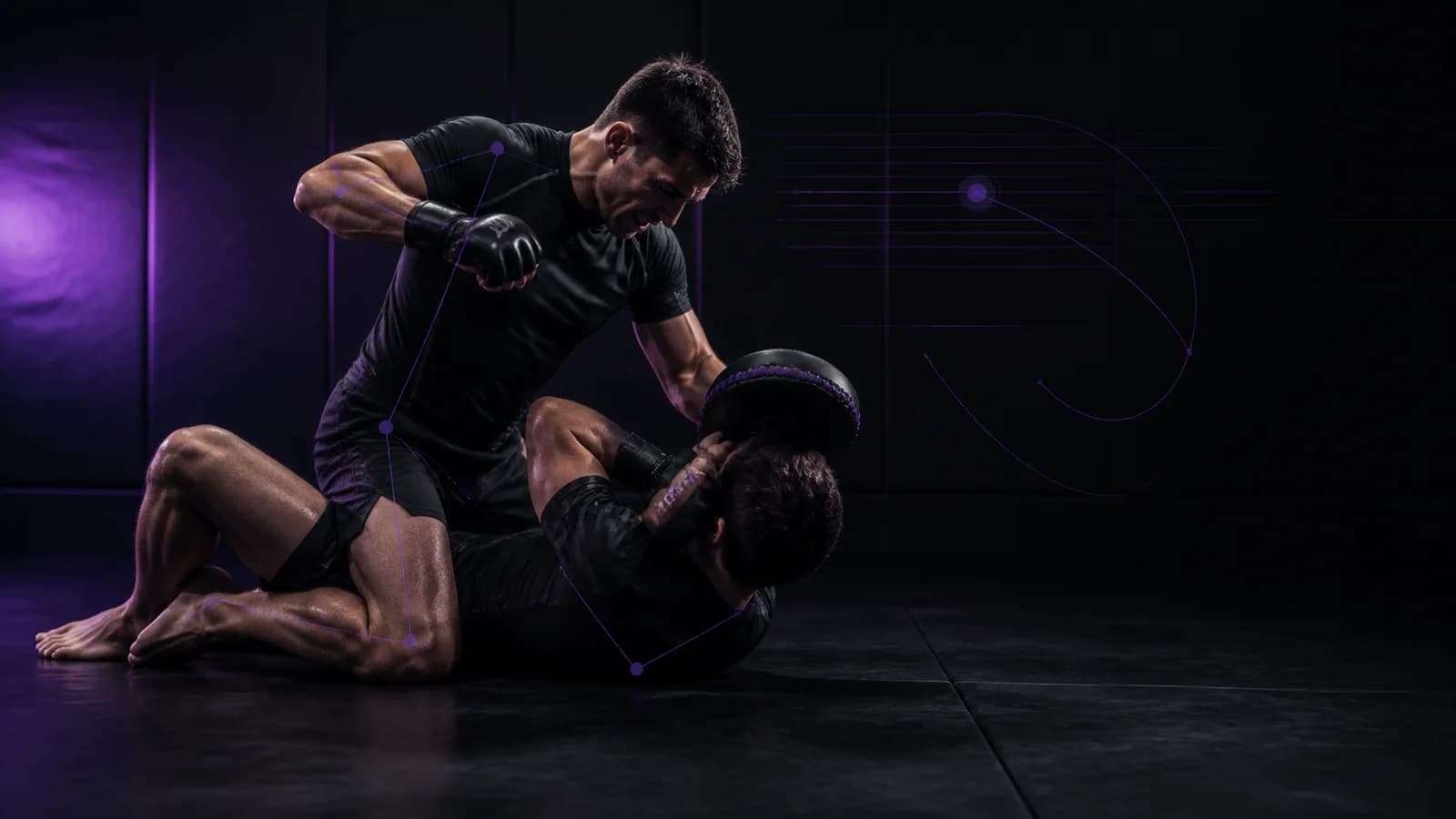
Ground and pound combines positional control with strikes from top position. Position comes first: stabilise your base, protect your posture, control the opponent’s hips and frames, then create a short opening for a legal strike. Practise the sequence on pads with a qualified coach before you add live resistance.
Do not learn head strikes from an unsupervised article. Use agreed pads, protective equipment, clear intensity limits, and immediate stop signals. Never strike an unprotected training partner in a drill.
Position before punches
Every strike removes a post or shifts your weight. If you punch before you establish control, the bottom athlete can bridge, recover guard, trap the arm, or stand.
Check four things before the hand leaves the floor or body:
- Your knees or feet give you a stable base.
- Your head and spine stay organised rather than reaching forward.
- You control or account for the nearest frame.
- You know where your striking hand returns.
Common top positions
Closed or open guard: keep posture and manage the hips before you strike. Reaching with both hands creates submissions and sweeps.
Half guard: control the upper body and free the trapped leg while maintaining base. Short strikes can appear, but passing or stabilising may matter more.
Side control: distribute weight without resting both hands on the mat. Strikes should not make you lose chest and hip control.
Mount: keep the knees and hips responsive to bridges. A high posture can create force but also changes balance.
Build posture that survives resistance
Do not confuse sitting upright with good posture. Useful posture lets you absorb a bridge, post when needed, and recover the striking hand without falling across the partner.
Use short punches and elbows only where the rules and coaching session allow them. Competition rules differ by organisation, age, class, and amateur status. Check the current rules for the event you enter.
Three safe pad drills
Base and return
Your partner lies on the mat and holds a focus mitt away from the head. Settle in a coached top position, touch the pad lightly, and return the hand to its post or guard. The partner gives a small bridge after every strike.
Frame control to target
Your partner presents a safe frame and a pad. Clear or pin the frame as your coach directs, strike the pad once, then reset. Keep the sequence technical rather than competitive.
Position circuit
Move through guard, half guard, side control, and mount with no strikes. At each stop, identify your base and return path. Add one light pad strike only after every position stays stable.
Review without rewarding force
Score the drill for balance, posture, legal target, and clean recovery. Do not score power. If the pad drifts near the partner’s head, stop and reset it.