
Guides
Best Martial Art for Self-Defense: 7 Arts Compared Honestly
Compare MMA, BJJ, Muay Thai, boxing, wrestling, judo and Krav Maga for real self-defense. See what each one covers, where it leaves gaps, and which one fits your life.
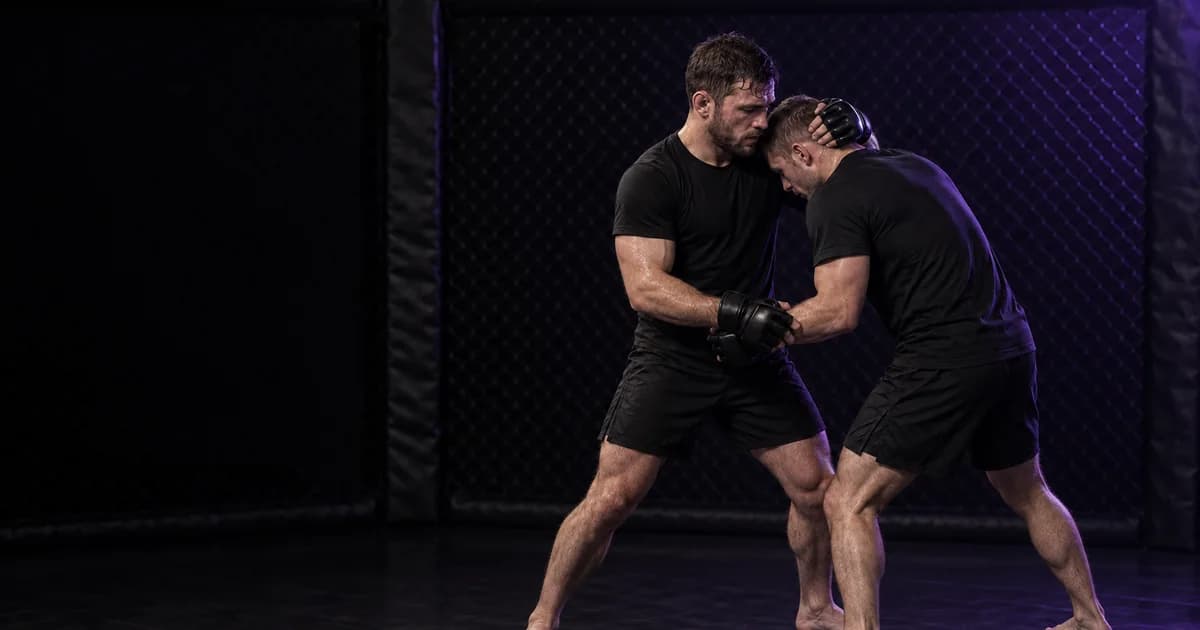
The best martial art for self-defense is one that trains you against a fully resisting partner in all three ranges of a fight: striking distance, the clinch, and the ground. Mixed martial arts (MMA) covers all three in one gym, which makes it the most complete single choice. If you prefer one art, pair a striking art such as Muay Thai or boxing with a grappling art such as Brazilian jiu-jitsu (BJJ), wrestling or judo. Whatever you choose, the skill that keeps you safest is still avoiding the fight and getting away.
What makes a martial art work for self-defense
Look for four things before you sign up:
- Live sparring. You practise against a partner who resists at controlled intensity. Techniques you only drill on a cooperative partner rarely survive stress.
- All ranges. Real fights move from punches to grabbing to the ground in seconds.
- Takedown defense. Staying on your feet matters on concrete, around furniture, or when someone else joins in.
- Getting up. You need to escape from the bottom and stand back up, not just win on the ground.
The 7 martial arts compared
| Art | Striking | Clinch | Ground | Live sparring | Main gap for self-defense |
|---|---|---|---|---|---|
| MMA | Yes | Yes | Yes | Yes, regularly | Sport rules skip weapons and multiple attackers |
| Brazilian jiu-jitsu | No | Some | Excellent | Yes, rolling every class | No striking; pulling guard is risky on the street |
| Muay Thai | Excellent, including knees and elbows | Excellent | No | Yes | Nothing for the ground |
| Boxing | Excellent with hands | Limited | No | Yes | No kicks, takedowns or ground game |
| Wrestling | No | Excellent | Good control on top | Yes | No striking or submissions |
| Judo | No | Excellent, with throws | Good pins and some submissions | Yes, randori | No striking |
| Krav Maga | Yes | Some | Some | Varies a lot by school | Quality and sparring differ widely |
1. MMA, the most complete single choice
MMA gyms teach striking, wrestling, clinch work and ground fighting, then combine them. You learn to strike, defend a takedown, and get up if you fall. Early UFC events in the 1990s showed how often one-range specialists struggled against opponents who fought in a different range. That lesson shaped modern MMA training. Start with our MMA drills for beginners.
2. Brazilian jiu-jitsu
BJJ teaches you to control a bigger opponent on the ground and escape bad positions. You roll live in nearly every class. Its weak spot for self-defense is the lack of striking and a sport habit of sitting to guard, which you do not want on a sidewalk.
3. Muay Thai
Muay Thai trains punches, kicks, knees, elbows and a strong clinch. It builds toughness and fitness fast. It does not teach ground fighting.
See how Muay Thai and MMA differ on rules, scoring and injuries in MMA vs Muay Thai.
4. Boxing
Boxing gives you the best hands, head movement and footwork per hour of training. It is easy to find and quick to apply. You get nothing for kicks, clinch throws or the ground.
5. Wrestling
Wrestling decides where a fight happens. Good wrestlers stay on their feet or put the other person down and stay on top. Add striking to cover the gap.
6. Judo
Judo trains throws, grips and falling safely, all tested in live randori. Knowing how to fall without hitting your head is a self-defense skill on its own.
7. Krav Maga
Krav Maga focuses directly on self-defense scenarios, including weapons awareness. Quality varies between schools. Choose one that runs regular pressure-tested sparring, not only choreographed drills.
Which one fits you
- You want one gym that covers everything: MMA.
- You are smaller or worried about being grabbed: BJJ, judo or wrestling first, then add striking.
- You want fitness and confidence fast: boxing or Muay Thai.
- You want scenario training for daily life: Krav Maga, from a school that spars.
The gym matters as much as the art. Pick good coaches, safe training partners and a schedule you can keep for a year.
How to start MMA training safely
- Learn your stance first. Our MMA stance guide balances striking and takedown defense.
- Drill the sprawl early. A good sprawl keeps you on your feet.
- Add one takedown. The double leg takedown is the most common starting point.
- Spar light. Start with technical sparring at low intensity and wear headgear, a mouthguard and shin guards.
- Know the rules. Our MMA rules guide explains what sport rules allow, and the MMA scorecard lets you score rounds the way judges do.
Self-defense starts before the fight
Martial arts give you options, but the safest outcome is no fight. Notice your surroundings, keep distance, use your voice, and leave early. If someone wants your phone or wallet, hand it over. Your training is for moments when you cannot get away.
Follow the beginner guide to fighting skills to see how a gym builds stance, defense, takedown awareness, and safe resistance without glorifying street fights.
Common questions
Is MMA good for self-defense?
Yes. MMA trains striking, clinch work and ground fighting against resisting partners, which covers the ranges of a real fight. It does not replace awareness and de-escalation.
What is the best martial art for self-defense for a woman?
Grappling arts like BJJ and judo help you escape grabs and control a larger person. Pair one with striking, and pick a gym with good partners and coaches.
How long does it take to learn self-defense?
Most people gain useful basics in a few months of regular classes, two to three times a week. Real confidence under pressure takes a year or more of live training.
Is Krav Maga better than MMA?
They focus on different things. Krav Maga trains self-defense scenarios; MMA trains complete fighting skills with frequent sparring. The school and how often you spar matter more than the name.